Amazon SEO in 2026: The AI-Powered Guide to Dominating Organic Rankings

Amazon SEO is the process of optimizing your product listings to rank higher in Amazon's organic search results for relevant keywords. Unlike Google, Amazon's algorithm prioritizes transactional factors such as sales velocity, conversion rates, and customer satisfaction, making on-page optimization, keyword relevance, and performance metrics the cornerstones of a successful strategy. Mastering these elements is critical for driving visibility, traffic, and sales in the world's largest product marketplace.
Key Takeaways
- The A11 Algorithm Is About Profitability: Amazon's latest algorithm weighs factors like conversion rate, sales velocity, and seller authority more heavily than ever. It's not just about relevance; it's about how well your product converts and satisfies customers.
- Keyword Strategy Is a Science: Effective Amazon SEO starts with identifying high-intent, transactional keywords. This involves analyzing competitor listings (reverse ASIN lookups), using Amazon's search suggestions, and focusing on long-tail keywords that signal a readiness to buy.
- On-Page Optimization Is Non-Negotiable: Every element of your listing—title, bullet points, description, and backend search terms—must be strategically optimized with relevant keywords while focusing on benefits that persuade shoppers to click and convert.
- Visuals Drive Conversions: High-quality images, infographics, and videos are not just for show. They directly impact click-through rates and conversion rates, which are powerful ranking signals for the A11 algorithm.
- A+ Content Boosts SEO Indirectly: While A+ Content keywords have limited direct indexing impact, the enhanced visuals and detailed information significantly improve user experience and conversion rates, which in turn boosts your organic ranking.
- External Traffic Is a Supercharger: Amazon rewards sellers who drive external traffic (from social media, blogs, etc.) to their listings. This signals brand authority and reduces Amazon's reliance on its own ad spend.
- AI Is the New Competitive Edge: Leveraging AI for keyword research, competitor analysis, and content creation eliminates the guesswork and manual effort, allowing you to build a scalable, data-driven optimization strategy.
Decoding the Amazon A11 Algorithm: What Matters Most Now
If you're still thinking about Amazon's old A9 algorithm, you're already behind. The platform's algorithm has evolved, with many experts referring to its latest iteration as A11, indicating a more sophisticated approach to ranking. This new logic is smarter, more holistic, and laser-focused on one thing: shopper satisfaction that leads to profitable sales for Amazon.
From A9 to A11: The Evolution of Amazon's Ranking Logic
The primary shift is from a simple keyword-relevance model (A9) to a comprehensive performance-and-relevance model (A11). The algorithm now deeply analyzes user behavior and sales data to determine which products deserve the top spots. It asks not just "Is this product relevant?" but also "Does this product convert? Does it delight customers? Is this seller reliable?" This means organic and paid signals are more intertwined than ever, as a successful PPC campaign can directly boost organic ranking by increasing sales velocity.
Key Ranking Factors in 2026: A Data-Driven Breakdown
- Sales Velocity for Specific Keywords: The number of sales generated from a particular search term is a massive ranking signal. This tells Amazon that your product is the most relevant and desirable result for that query.
- Conversion Rate (CVR): Your unit session percentage is critical. Amazon tracks how many visitors to your page convert into buyers. A high CVR signals a well-optimized listing and a desirable product.
- Keyword Relevance & Indexing: This is the foundation. Your product must be properly indexed for all relevant search terms. This is achieved by strategically placing keywords in your title, bullets, description, and backend search terms.
- Customer Satisfaction: This is a broad category that includes your overall review rating, the quantity and quality of recent reviews, your return rate, and your seller feedback score. Low ratings or high return rates can actively suppress your rankings.
- Inventory & Fulfillment Health: You can't sell what you don't have. Frequent stockouts will kill your sales velocity and, consequently, your rank. Using Fulfillment by Amazon (FBA) can also provide a slight ranking advantage due to Prime eligibility and guaranteed fast shipping.
- External Traffic Influence: Driving traffic from your blog, social media, or email list to your Amazon listing is now a confirmed ranking factor. Amazon sees this as a sign of a strong brand and rewards you for bringing new customers into its ecosystem.
Step-by-Step: Crafting an AI-Optimized Amazon Listing for Top Rankings

Building a listing that satisfies both the A11 algorithm and human shoppers requires a methodical approach. Follow these steps to create a foundation for sustained organic growth.
-
Identify Your High-Impact Keywords (Beyond Basic Search Volume)
Your goal is to find keywords with high transactional intent. Start by thinking like your customer. What specific phrases would they use to find a product like yours? Use Amazon's search bar autocomplete to see what real shoppers are searching for. Then, dive deeper with reverse ASIN lookups on your top three competitors to see which keywords are driving their sales.
Pro Tip: Focus on long-tail keywords (3+ words). A search for "shoes" is vague, but a search for "waterproof trail running shoes for women size 8" is from someone ready to buy.
This is where AI can give you an unfair advantage. Instead of spending hours manually compiling spreadsheets, you can use a platform like BestSEOArticles to perform real-time competitor analysis. It analyzes top-ranking products and identifies the exact keywords and content gaps you need to target, turning a week of research into minutes.
-
Master Your Product Title: The First Impression for Algorithm & Shoppers
Your title is the most heavily weighted element for keyword relevance. It needs to be clear, descriptive, and packed with your most important keywords without sounding robotic.
Formula: Brand + Main Product Type + 2-3 Key Features/Benefits + Important Attributes (Size, Color, Quantity)
Example: Instead of "Great Coffee Maker," use "BrewMaster Pro | 12-Cup Programmable Drip Coffee Maker with Thermal Carafe & Auto-Shutoff | Stainless Steel."
-
Optimize Bullet Points: Highlight Benefits that Convert
Shoppers scan bullet points to make a quick decision. Don't just list features; translate them into compelling benefits. Use all five bullet points and integrate your secondary keywords naturally.
Example: Instead of "Feature: 1.5L water tank," write "Benefit: Brews Up to 12 Cups at Once - Perfect for entertaining guests or fueling your entire morning without constant refills."
-
Write a Persuasive Product Description
This is your chance to tell a story and address any remaining customer questions or hesitations. Expand on the benefits from your bullet points, overcome potential objections, and paint a picture of how your product will improve the customer's life. This is a great place to include long-tail keywords that didn't fit in the title or bullets.
-
Leverage Backend Search Terms Strategically
These are "hidden" keywords that shoppers don't see but Amazon's algorithm does. You have a limited character count for backend search terms, so use this space efficiently. Include synonyms, common misspellings, and related terms you couldn't fit elsewhere. Do not repeat keywords already used in your title or bullets.
Expert Advice: Think of your backend search terms as a safety net. Fill it with every relevant permutation of your keywords. For a "yoga mat," you might include terms like "pilates mat," "exercise pad," "non slip workout floor," and even Spanish translations like "tapete de yoga" if relevant to your market.
-
Use High-Quality Images & Video to Drive Conversion
Visuals sell the product. Your main image must be on a pure white background, but your other slots should be used for lifestyle shots (product in use), infographics (highlighting key features), and comparison charts. All images should be at least 1000x1000 pixels to enable zoom. Including a product video can significantly increase conversion rates, making it a powerful tool for your listing.
-
Enhance Your Page with A+ Content
If you're a brand-registered seller, A+ Content (formerly Enhanced Brand Content) is a must. It allows you to use rich media, comparison charts, and branded storytelling modules to create a more engaging product page. While Amazon states that A+ Content isn't directly indexed for search, its impact on conversion rates is undeniable. A higher CVR is a powerful signal to the A11 algorithm, leading to better organic rankings over time.
-
Aggressively Pursue Customer Reviews and Ratings
Social proof is everything on Amazon. Your product's review count and average star rating are critical ranking factors. Use Amazon's "Request a Review" button for recent orders and enroll in the Amazon Vine program for new products to get those crucial first reviews. Aim for a high average rating, as customer satisfaction is a critical ranking factor.
Beyond the Listing: External Factors That Influence Your Rank
Top-tier Amazon SEO in 2026 isn't just about what happens on your product page. Amazon's algorithm now looks for external validation signals to identify authoritative brands and high-quality products.
The Power of External Traffic
Driving traffic from sources outside of Amazon—such as your blog, an influencer's Instagram post, or a TikTok video—is highly rewarded. This tells Amazon that your product has demand beyond its own platform. You can create special, trackable URLs using Amazon Attribution to measure the effectiveness of these external campaigns. A successful external traffic strategy not only drives direct sales but also provides a significant boost to your organic keyword rankings.
Integrating Amazon PPC for Organic Lift
Think of Amazon PPC (Pay-Per-Click) and SEO not as separate channels, but as two sides of the same coin. A well-run PPC campaign can directly fuel your organic growth in several ways:
- Increased Sales Velocity: Ads generate immediate sales, which increases your overall sales velocity—a key ranking factor.
- Keyword Data Mining: Your PPC campaign reports show you exactly which keywords are converting into sales. You can then move these proven keywords into your organic listing optimization.
- The "Honeymoon" Period: For new products, PPC is essential for generating initial sales and reviews, helping the algorithm understand what your product is and who it's for, which kickstarts organic indexing and ranking.
The Full-Funnel Amazon SEO System
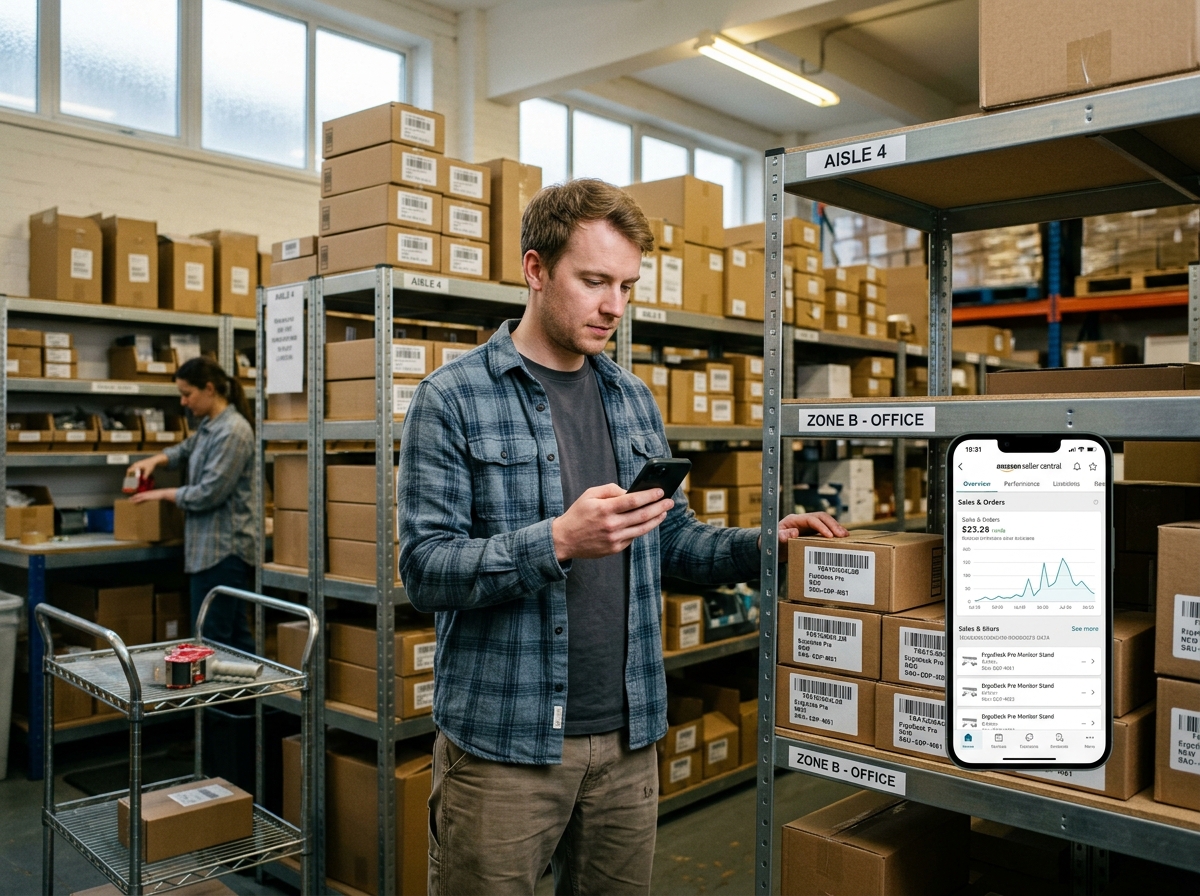
Modern Amazon SEO is a connected growth system, not a set-it-and-forget-it checklist. It's a continuous cycle of research, optimization, performance, and adaptation. You must view your strategy as a full-funnel approach that considers every stage of the customer journey on the platform.
- Awareness (Top of Funnel): This is where your keyword research and title optimization come in. Are you visible for the broad and specific terms your customers are searching for?
- Consideration (Middle of Funnel): Once they click, your images, bullet points, and A+ Content must work together to persuade them that your product is the best choice.
- Conversion (Bottom of Funnel): Your pricing, shipping options (FBA/Prime), and the social proof from your reviews close the deal.
- Loyalty (Post-Purchase): Excellent customer service and a high-quality product lead to positive reviews and repeat purchases, feeding back into the top of the funnel.
Systemic Approach: Treating these elements in isolation is a common mistake. A brilliant title won't save a listing with terrible photos. A huge ad budget won't fix a product with a 2-star rating. Every piece must work in harmony to create a flywheel effect that propels your organic rank upward.
To execute this system efficiently, you need to produce high-quality content at scale—from persuasive descriptions to the blog posts that drive external traffic. Platforms built on real-time data, like the AI SEO article generator from BestSEOArticles, allow you to create this content pipeline without the manual overhead. By analyzing what's already working on both Amazon and Google, you can ensure every piece of content is optimized to perform from the moment you publish it.
Monitoring and Adapting Your Amazon SEO Strategy
Amazon is a dynamic marketplace. Competitors change their pricing, new sellers enter the market, and the algorithm is constantly being tweaked. You must track your performance and adapt.
Use Amazon's built-in tools like Brand Analytics and the Search Query Performance dashboard to monitor which keywords you're ranking for and what your click-through and conversion rates are. Track your keyword rank positions using third-party software and keep a close eye on your competitors' listings. If you see a sudden drop in rank, investigate whether it's due to a new competitor, a negative review, or a pricing change.
Frequently Asked Questions about Amazon SEO
How long does it take to see results from Amazon SEO?
You can see initial indexing changes relatively quickly, but significant and stable ranking improvements usually require a sustained effort over several weeks to a few months. Factors like competition, sales history, and the effectiveness of your optimization will influence the timeline.
What is the difference between Amazon SEO and Google SEO?
The biggest difference is intent. Google serves informational and transactional queries, while Amazon is almost exclusively transactional. Therefore, Amazon's algorithm heavily prioritizes conversion-related metrics (sales, CVR) whereas Google's prioritizes factors like backlinks and user engagement on a webpage.
Can I just stuff my listing with keywords?
No. This is an outdated and ineffective practice. The A11 algorithm is sophisticated enough to detect and penalize keyword stuffing. Your content must be readable and persuasive for human shoppers first. Keywords should be integrated naturally where they make sense.
Is Amazon PPC necessary for good SEO?
While not strictly necessary, it is highly recommended, especially for new products or in competitive niches. PPC accelerates the data collection and sales velocity needed to inform and boost your organic strategy. They work best together.
How important are backend keywords?
They are very important. They are your primary tool for telling Amazon's algorithm to index you for keywords that you can't fit or don't belong in your user-facing copy, such as synonyms, misspellings, or competitor brand names (use with caution).
Does A+ Content help with SEO ranking?
Indirectly, yes. While the text in A+ modules is not heavily indexed for organic search, its ability to improve the user experience and increase your conversion rate is a powerful positive signal to the ranking algorithm.
Conclusion: Your Next Move in the Amazon Marketplace
Amazon SEO in 2026 is far more than a keyword game. It's a comprehensive discipline that blends data science, compelling copywriting, and a deep understanding of customer psychology. By focusing on the core pillars of the A11 algorithm—relevance, performance, and customer satisfaction—you can build a resilient strategy that drives sustainable organic growth.
The key is to move away from reactive fixes and adopt a proactive, full-funnel system. Optimize every element of your listing, leverage the symbiotic relationship between PPC and SEO, and never stop monitoring your performance. The sellers who dominate the search results are the ones who treat their listings not as static pages, but as dynamic sales engines that are constantly being refined.
If you're ready to implement this level of optimization across your product catalog but lack the time for the intensive research and writing required, it's time to leverage AI. Explore how tools like BestSEOArticles can help you generate optimized content that's designed to rank, freeing you up to focus on growing your business.
Generate SEO articles with AI
Publish SEO content built on real competitor analysis, ready for your CMS.
Buy →